
 Back to resources
When supply and implant documentation compete with patient care, the effects reach far beyond the operating room. The problem isn’t the nurse. It’s the workflow.
The case is moving. The surgeon asks for an item that was not on the preference card. A rep hands over an implant. Someone opens another stapler. The circulator has a patient on the table, a team to support, and a scanner that may or may not read the barcode in their hand.
So they make the call perioperative nurses are faced with every day: "I'll chart it later."
It is the right call. The patient comes first. But, the work does not go away. It waits for them after the case, when the packaging is in the trash, the rep has left, and the details have to be reconstructed from memory. Or it comes back days later as a question from the charge team, a gap in the implant record, or a discrepancy someone else has to chase down.
For nurses in the OR and procedural areas, catching up on documentation after the case is routine, and few people outside those teams see the extra work. This week is a good time to raise awareness of that work, and to share what a nurse’s day looks like when a health system takes much of that burden away, and how those health systems make the change.
Documentation was never designed around the pace of the OR
On paper, recording what was used in a case is simple. In the room, it asks a nurse to move between the patient, the surgical team, the product packaging, a scanner, and the EHR, often in the same minute.
The product may not be on the preference card. The barcode may not scan. An implant's serial number, lot number, and expiration date may need to be typed by hand. There are local rules about which items get documented and how, and a traveling nurse may have had a single afternoon to learn them.
Every one of those steps pulls attention away from the patient. Every delay makes the record harder to piece together afterward.
When product documentation depends on manual steps and a patchwork of tools, even the strongest clinical teams can’t manage it well in a fast-moving procedural environment. Nurses absorb the burden during and after the case, and the record often ends up inaccurate and incomplete.
The work that gets deferred lands somewhere
When product documentation is delayed or incomplete, the first person who pays is the nurse. They are the one fielding the follow-up about a case that ended three days ago, and the one who has to remember which of two similar implants went in.
But the cost keeps moving through the building:
- Patient safety teams have a harder time tracing an implant or responding to a recall when the record has gaps.
- Supply chain works from an inventory picture that does not match what was actually used, which makes replenishment and case preparation guesswork.
- Finance misses charges for products the hospital bought and used but never captured in the case record.
Across our health system partners, AssistIQ has identified 6 to 10% of chargeable items in the OR that prior documentation processes missed. Those are products used in patient care that may never reach the financial record. Behind each one is a nurse who was asked to do two jobs at once and chose the patient.
What changes when documentation keeps up with the case
Nurses do not need another reminder to document. They need a way to capture product information that works at the speed of the procedure.
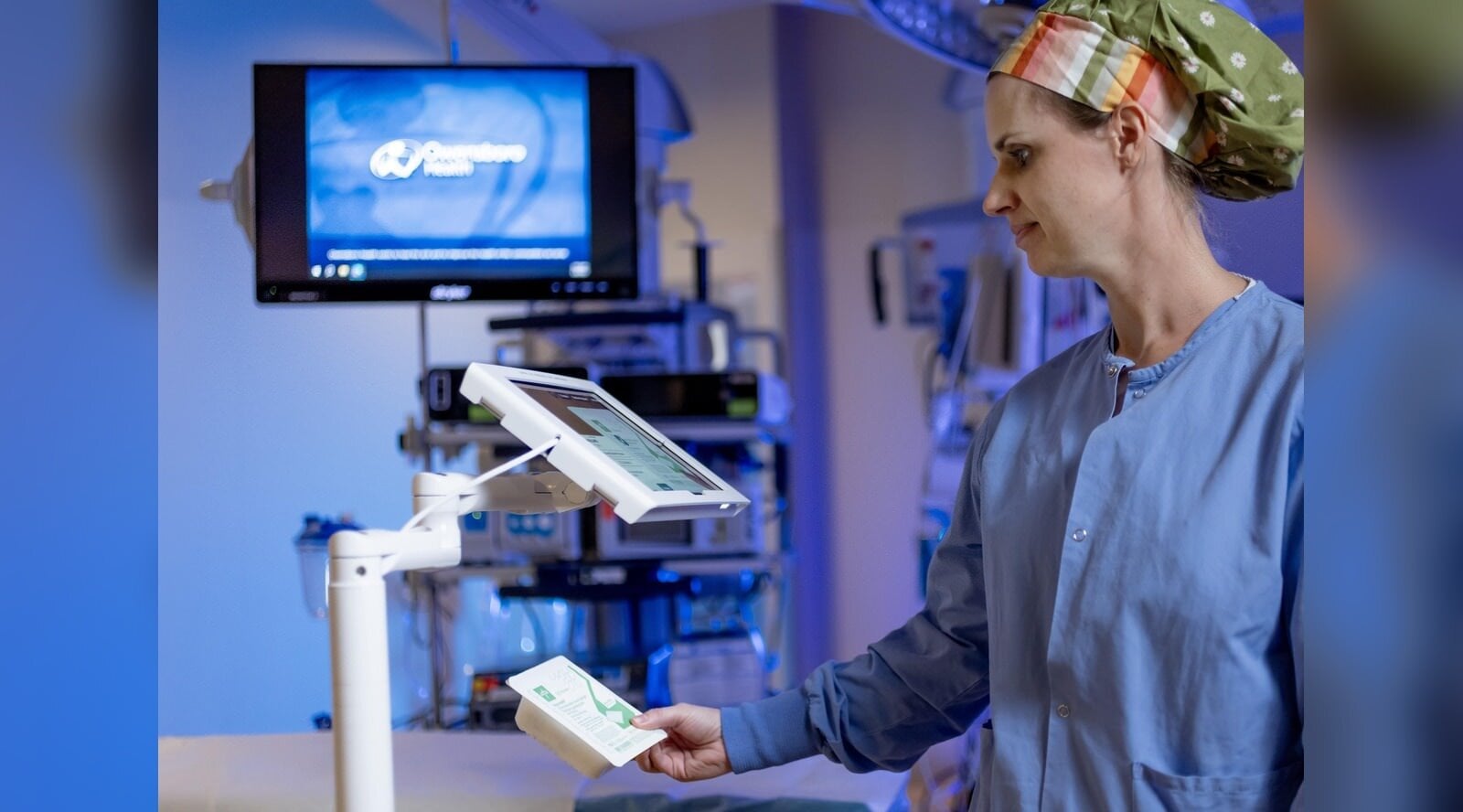
That is the problem we built AssistIQ to solve. A circulator holds a product under an iPad camera. AI Computer vision recognizes it and reads the details off the packaging, including implant serial numbers, UPIs, lot numbers, and expiration dates. The information is integrated into the EHR. All captured images are saved so trusted product usage can be reviewed downstream, by other impacted teams like charge capture.
The goal is a more complete, reliable record with less manual work for the people in the room. Health systems using AssistIQ have seen:
- 15 or more minutes back per case through faster, more accurate documentation.
- A 90% reduction in tissue documentation errors within the first two weeks at ProMedica.
- A 90% reduction in inventory depletion errors in the OR at Owensboro Health.
- More than 98% product recognition accuracy across deployments.
The metric that matters most to us is the one a nurse gives. Lindsay Hawes, a nurse circulator at Owensboro Health, put it this way:
"This makes my job a lot easier so I can focus on patient care."
Start by listening to the people in the room
If you lead a perioperative department and want to know what delayed documentation is costing you, do not start with a report. Start with the nurses.
Watch how products get documented during a case. Ask circulators where they lose time and what they push until later. Ask the charge team and supply chain how often they have to go back to a nurse to finish a record. Those conversations will show you where the workflow is making work for the clinical team, and where a better one could give time back.
This Perioperative Nurses Week, we are grateful to the nurses who put patients first, even when the systems around them make that harder than it should be. They deserve documentation built around the way they actually care for people.
Learn how AssistIQ gives time back to perioperative teams.